

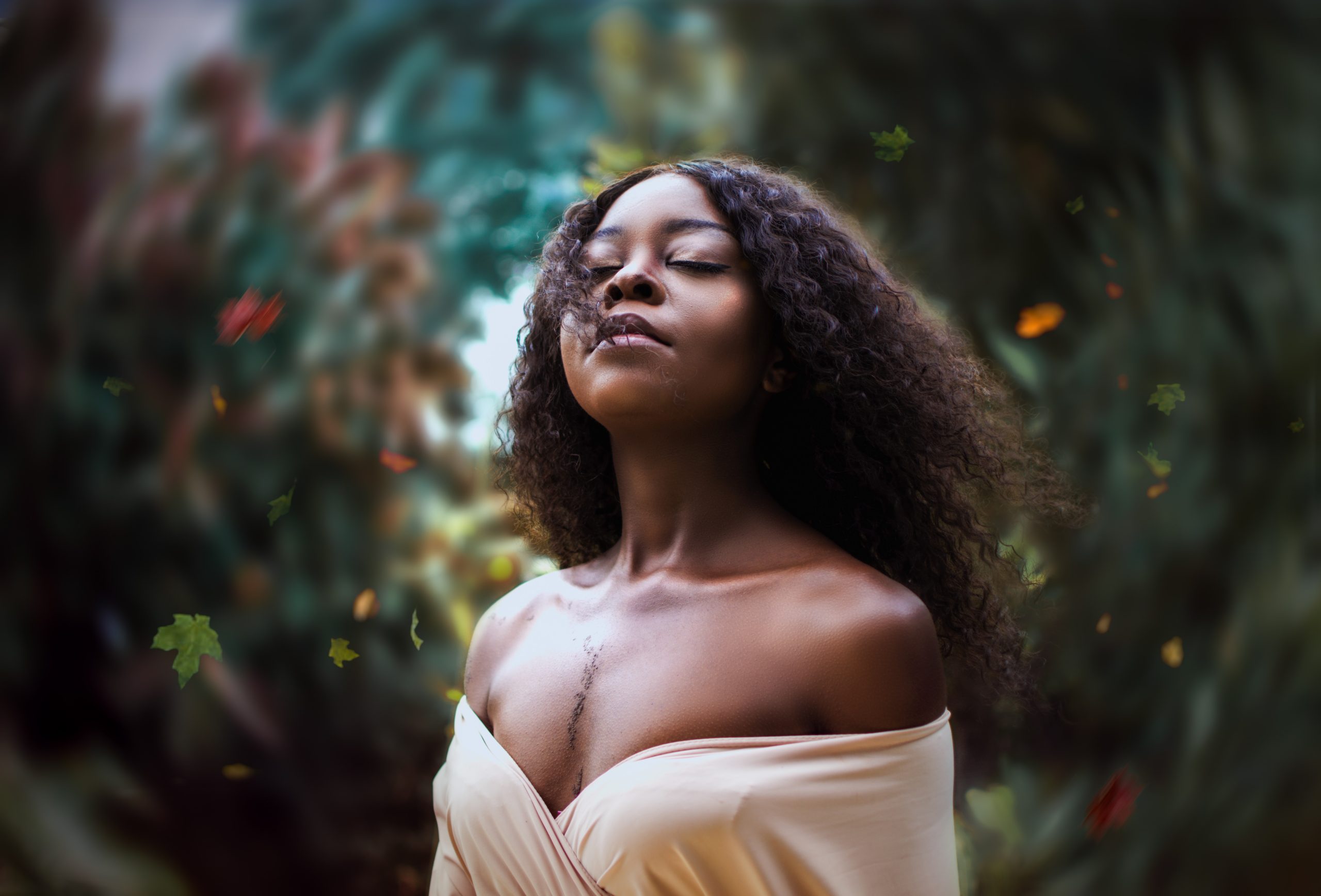
World of TEOTE #5: The Anti-Gothic Heroine
Welcome to World of The Essence of the Equinox, a series exploring the worldbuilding, influences and ideas behind my completed gothic fantasy trilogy.
In this fifth instalment, I’d like to talk about how Laila fits the constructs of a Gothic Heroine but also the ways in which she doesn’t.
What is the Gothic Heroine?
Gothic heroines are often constructed in the image of white Western femininity. A chaste, virginal girl who is innocent for the sake of being ignorant; youthful for the sake of being inexperienced; and “pure” in the sense that she is abstinent to sexual matters. Her relationship with the designated “monster” in the story tends to be a Fall From Grace narrative. It is titillating for the fact that a worldly, older man has taken this pure, innocent woman and tainted her to suit his needs.
The Persephone myth is probably one of the original incantations of this. Hades literally “takes her by force” into the Underworld and then coerces or tricks her into being his bride. Past writers have attempted to reframe this narrative so that Persephone chooses to be seduced, but it ignores the fact that Hades has already kidnapped her in the first place. There are rooms for survival narratives where women gain power in victimised positions, but that’s not what I’m trying to parse by referencing this myth. I’m describing a generalised overview of an archetype that has been consistently played with, subverted, and twisted since the Age of Antiquity.
Some of my favourite Gothic Heroines wouldn’t much fit the above criteria. This willful and manipulative Catherine Earnshaw from Wuthering Heights is certainly no wide-eyed ingenue, for example. And I’ve always cared far more for the magnetically compelling Rebecca de Winter from the titular novel, than her nameless counterpart. It was these influences I drew from when constructing the character of Laila as opposed to Jane Eyre or Christine Daaé. But I think it’s safer to say she mixes elements of both traditional and subverted forms of Gothic Heroines to create something that’s entirely herself.
What is the Anti-Gothic Heroine?
The Anti-Gothic Heroine is what I’ve come to playfully dub as Laila’s character archetype. Where she differs from the traditional Gothic Heroine is the ways she in which she bastardises the trope. She is youthful but not inexperienced. She is not ignorant to sex, but audacious in her desires. Raised in a matriarchal society, she does not carry a lot of the same notions of what it means to be a woman as a traditional Gothic Heroine might; shackled by the norms and roles of the time she is written. When she looks upon a monster of a man she sees a thrilling danger to herself, but also a challenge, someone she can attempt to tame and master for her own ends.
This is a concept not often explored in female sexuality where submission, chastity, and emotional connection over physical desire is prized. Laila is lustful and she is not ashamed of her lust, because she was never taught to be. She is a pleasure-seeking hedonist and that trait doesn’t make her a ‘bad’ woman, as one might often expect and label her in other Gothic works. In spite of possessing traits many might regard as unpalatable, her goodness shines through it. She is not good because she is innocent, chaste or ignorant of desire. She is good because, despite her considerable flaws, she repeatedly chooses to act with compassion. Her virtue is something she does, not something her body possesses.
But the way Laila as a character most disrupts the trope of the Gothic Heroine… is the fact that she is not white.
When do we get the Black Gothic Heroine?
As the Gothic novel is part of Western literary canon, it only makes sense that a white woman happens to be the face of it. Having long been intrigued by the Gothic Heroine and her modern descendant in the Dead Girl Who Haunts The Narrative (à la Laura Palmer in Twin Peaks) , I always knew I eventually wanted to try my hand at writing one myself.
The trouble with this is the Gothic Heroine goes against notions of what a Black female character is, and what she is meant to be. Black women rarely get to be cast in roles as delicate, petite ingenues who are in constant peril—lusted after by a dark, villainous man who seeks to possess her. Even more rarely are we allowed the space to be the willful, self-absorbed, and manipulative archetypes of a Cathy. That isn’t to say we are not capable of being both. Which is why I wanted to offer the chance of occupying both roles in a fictional novel. Laila’s physicality might be dainty in comparison to her male counterparts, but she is still a force of nature. She survives through willpower, social cunning, intelligence and endurance. But she still has her moments of compassion, softness and vulnerability.
The Gothic heroine’s vulnerability has never been racially neutral. The ideal of the delicate woman deserving protection developed within cultures that did not extend that same protection—or even the same conception of femininity—to all women.
That tension immediately brings to mind Sojourner Truth’s 1851 intervention at the Women’s Rights Convention in Akron, Ohio. Truth was an enslaved woman who later freed herself and became active in antislavery movements and women’s rights movements as well.
I see her speech referenced quite a bit in social justice spaces, but I am curious whether the white people bandying it about have ever taken the time to read it. Nor if they know this version is not a contemporaneous verbatim transcript of Truth’s 1851 speech. Frances Dana Barker Gage published that version years later and rendered Truth’s speech in a Southern-style dialect, despite Truth having grown up speaking Dutch in New York. There’s a comical irony about a white woman taking a Black woman’s words and translating them to a lexicon they believe is more “authentic”.
In spite of this, even nearly 200 years later the words remain resonant:
That man over there says that women need to be helped into carriages, and lifted over ditches, and to have the best place everywhere. Nobody ever helps me into carriages, or over mud-puddles, or gives me any best place! And ain’t I a woman?
The entire speech is well worth a read. But it’s this excerpt above I want to draw your notice towards, because it relates to some thoughts I have regarding a recurring critique of Laila’s character. Which is that she supposedly “reads like a white woman.” I’ve always found the criticism interesting because it raises an obvious question: which of her characteristics are inherently white? Her femininity? Her sexual desire? Her physical vulnerability beside a much larger man? Her attraction to masculine strength? Her love of luxury? Her vanity, softness or romanticism?
None of these qualities cease to be available to a character because she is Black. If a Black female character becomes racially illegible the moment she occupies a mode of femininity culturally associated with white women, then our conception of Black womanhood remains extraordinarily narrow. Much of this has been written about by Black feminist thinkers such as Sojourner Truth, Gloria T. Hull and Kimberlé Crenshaw.
Representation cannot mean allowing Black women into fiction only when they embody an approved model of Black womanhood. They should be allowed to be warriors and ingenues, protectors and damsels, sexually dominant and sexually vulnerable, virtuous and selfish, soft and vicious.
Visually, one of my references for Laila was FKA twigs. I was drawn to the combination of delicacy, otherworldliness and striking beauty in her image, which suited my conception of a star-born Gothic heroine. As a character, Laila occupies a tradition that wasn’t built with women like her at its centre. She gets to be beautiful and vain, endangered and dangerous, sexually audacious and emotionally vulnerable. She gets to desire the monster, underestimate him, challenge him and occasionally need saving from him.
None of those things make her less Black.
Expanding representation must mean more than inventing new, respectable roles for Black women. It also means granting them access to the full inheritance of old ones—the romantic ones, the frightening ones, the frivolous ones and the deeply compromised ones.
Even the problematic ones. Especially the problematic ones.
Ready to enter Vysteria?
When the Stars Alight is the first novel in The Essence of the Equinox, my completed gothic fantasy trilogy about a star-born princess, the future king of demons and a love affair that collides with politics, power and the fate of their worlds.
Start with When the Stars Alight →
Already ready for the whole story?
Previous: #4 — Environmental Storytelling in Fantasy: Building Soleterea and Mortos
Next: #6 — Toxic Motherhood in Fantasy: Mothers, Daughters and Female Power in The Essence of the Equinox
Leave a Reply